

B.E Electrical & Electronics Engineering
Power your future with expertise in electrical systems, power generation, automation, and control systems. Our AICTE-approved programme at Komarapalayam, Namakkal District, Tamil Nadu prepares you to design, develop, and maintain the electrical infrastructure that powers the modern world.
Course Overview
About the Program
Our B.E. Electrical & Electronics Engineering program covers power systems, electrical machines, control systems, power electronics, renewable energy, and smart grid technologies.
Duration & Credits
The program spans 4 years with 8 semesters totaling 160 credits. Comprehensive learning framework balancing theory, learning lab work, and industrial training.
Approval
Approved by AICTE (All India Council for Technical Education) for 60 seats in 2026-27 and affiliated to Anna University, Chennai.
Eligibility
Candidates must have passed 10+2 with Physics, Chemistry & Mathematics with minimum 45% aggregate (40% for BC / MBC / DNC / SC / SCA / ST), as per the TNEA information brochure.
Why Choose Electrical & Electronics Engineering?
Industry-Aligned Learning Framework
Our learning framework is designed to meet current industry standards covering power systems, renewable energy, smart grids, electric vehicles, and automation technologies used globally.
Expert Senior Learners
Learn from highly qualified senior learners with M.E. and Ph.D. qualifications and industry experience in power systems, electrical machines, control systems, and power electronics.
Advanced Learning Labs
Access state-of-the-art learning labs for electrical machines, power systems, power electronics, control systems, renewable energy, and high voltage engineering with modern equipment.
Placement Support
The Training and Placement Cell gives aptitude, soft-skills and interview training and organises on-campus recruitment drives.
Research & Innovation
Engage in cutting-edge research in renewable energy systems, smart grids, electric vehicles, power quality, and energy management systems.
Industry Partnerships
Gain practical experience through internships and industrial visits to thermal power plants, substations, manufacturing units, and renewable energy installations.
Course Learning Framework
Semester 1
20 CreditsSemester 2
20 CreditsSpecializations Offered
Power Systems Engineering
Master power generation, transmission, distribution, grid management, smart grid technologies, and power system protection and control.
Power Electronics & Drives
Learn advanced power electronic converters, motor drives, electric vehicle technology, and industrial automation systems.
Renewable Energy Systems
Develop expertise in solar power, wind energy, hydroelectric systems, energy storage technologies, and microgrid design.
Industrial Automation
Gain proficiency in PLC programming, SCADA systems, industrial robotics, process control, and factory automation.
Electric Vehicles
Explore EV technology, battery management systems, charging infrastructure, motor control, and sustainable transportation.
Embedded Systems
Master microcontrollers, IoT devices, embedded C programming, real-time operating systems, and industrial embedded applications.
Career Opportunities
Electrical Engineer
Design, develop, and maintain electrical systems for power generation plants, substations, transmission networks, and industrial facilities.
Power Systems Engineer
Work on power system planning, operation, control, and protection. Analyze power flow, stability, and optimize grid performance.
Automation Engineer
Design and implement automation solutions using PLCs, SCADA, DCS, and robotics for manufacturing and process industries.
Power Electronics Engineer
Develop power electronic converters, inverters, motor drives, and control systems for renewable energy and electric vehicles.
Renewable Energy Engineer
Design and implement solar power plants, wind farms, and hybrid renewable energy systems. Work on energy storage and microgrid projects.
Project Engineer
Manage electrical projects including design, procurement, installation, testing, and commissioning of electrical systems and equipment.
Admission Process
Apply Online
Fill out the online application form with your academic details, personal information, and upload required documents through our official admission portal.
Document Verification
Submit required documents including mark sheets, certificates, and ID proof for verification. Our admission team will review and validate your documents.
Admission Confirmation
Pay the admission fees online or offline, confirm your seat, and attend the orientation program to begin your engineering journey with us.
State-of-the-Art Learning Labs
Experience hands-on learning in our modern learning labs equipped with industry-standard electrical and electronics equipment.
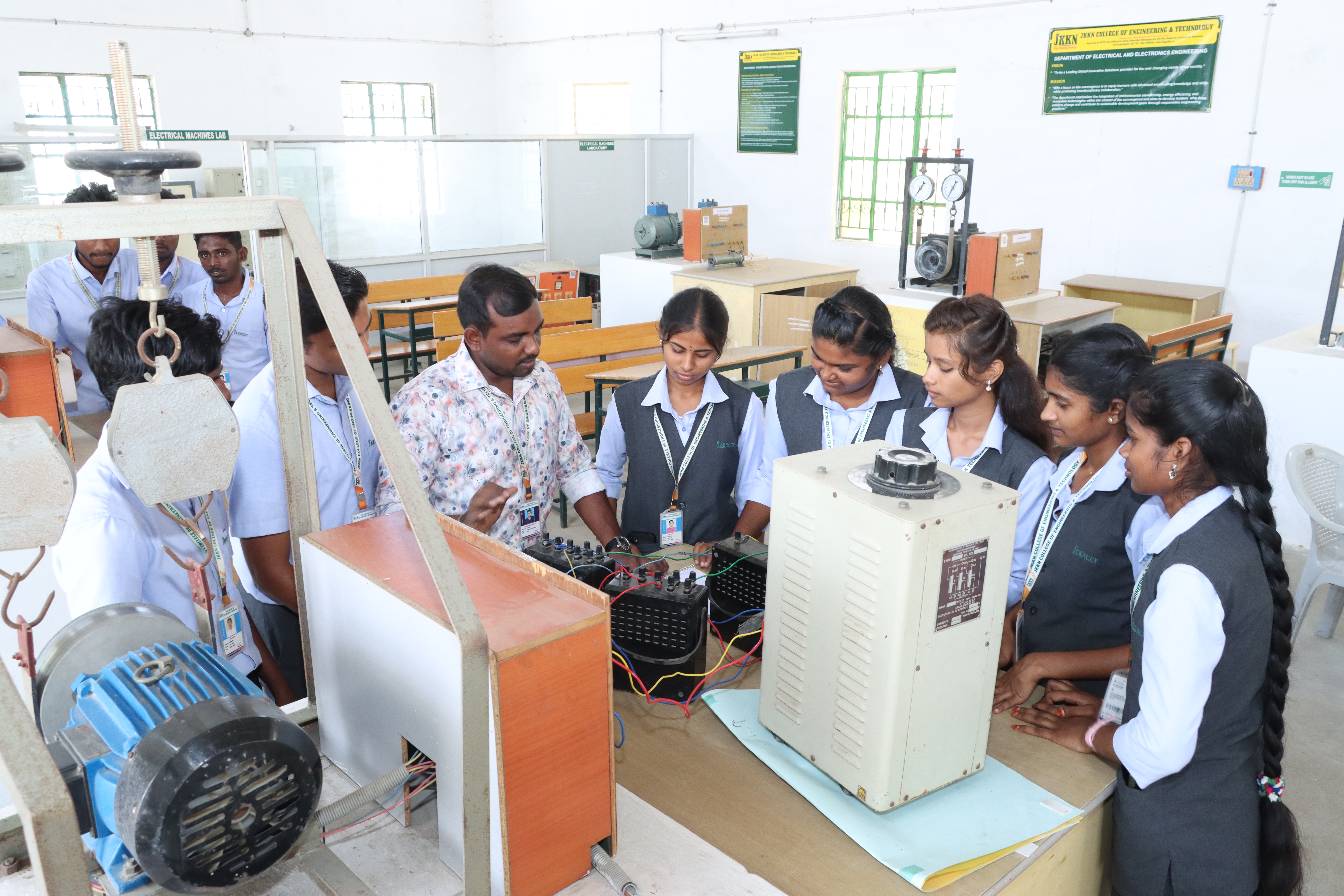
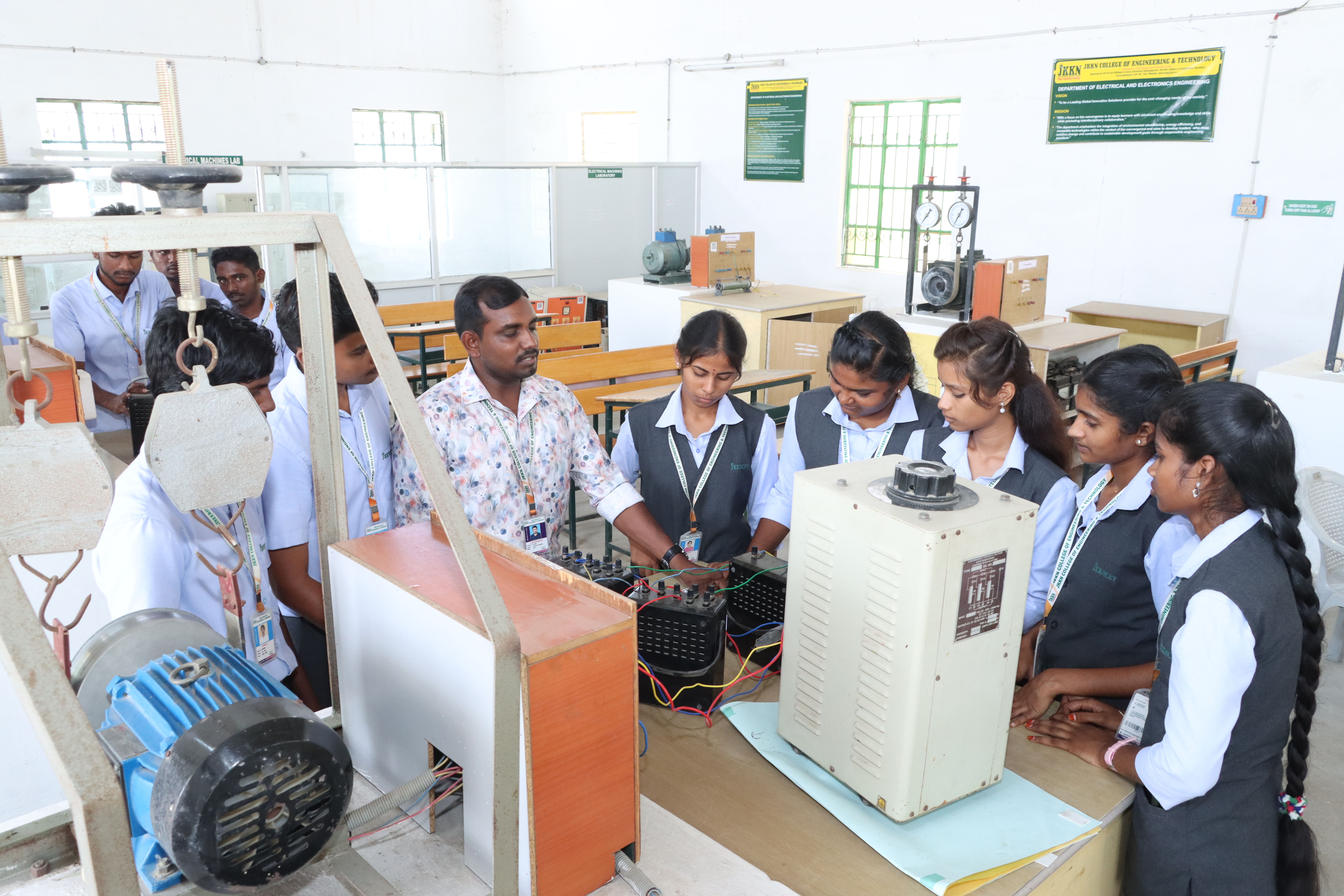
Electrical Machines Learning Lab
Well-equipped learning lab with DC machines, transformers, induction motors, synchronous machines, and testing equipment for comprehensive hands-on training in electrical machine operations.
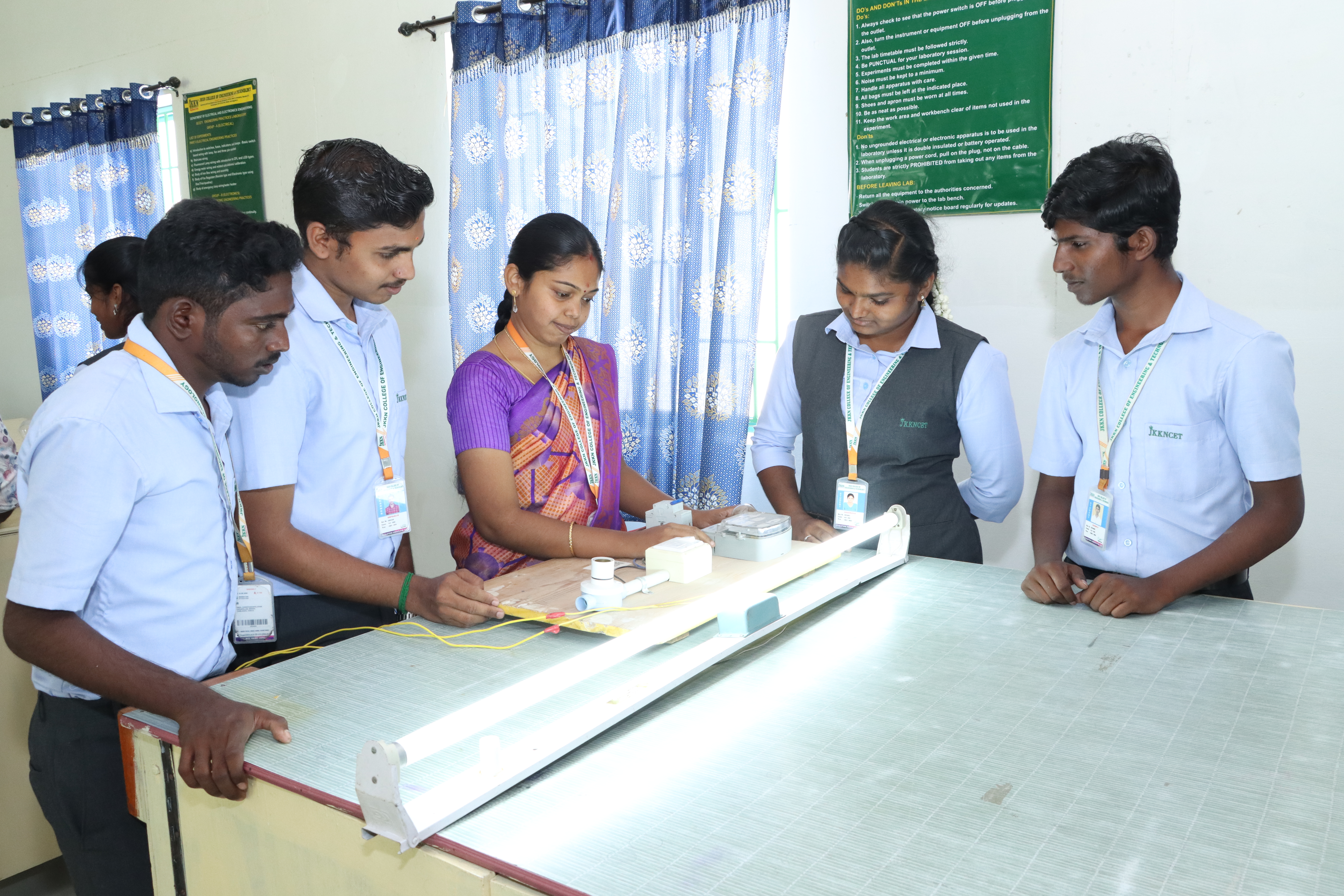
Power Systems Learning Lab
Advanced learning lab with power system simulation software, protection relays, circuit breakers, and equipment for studying power generation, transmission, and distribution.
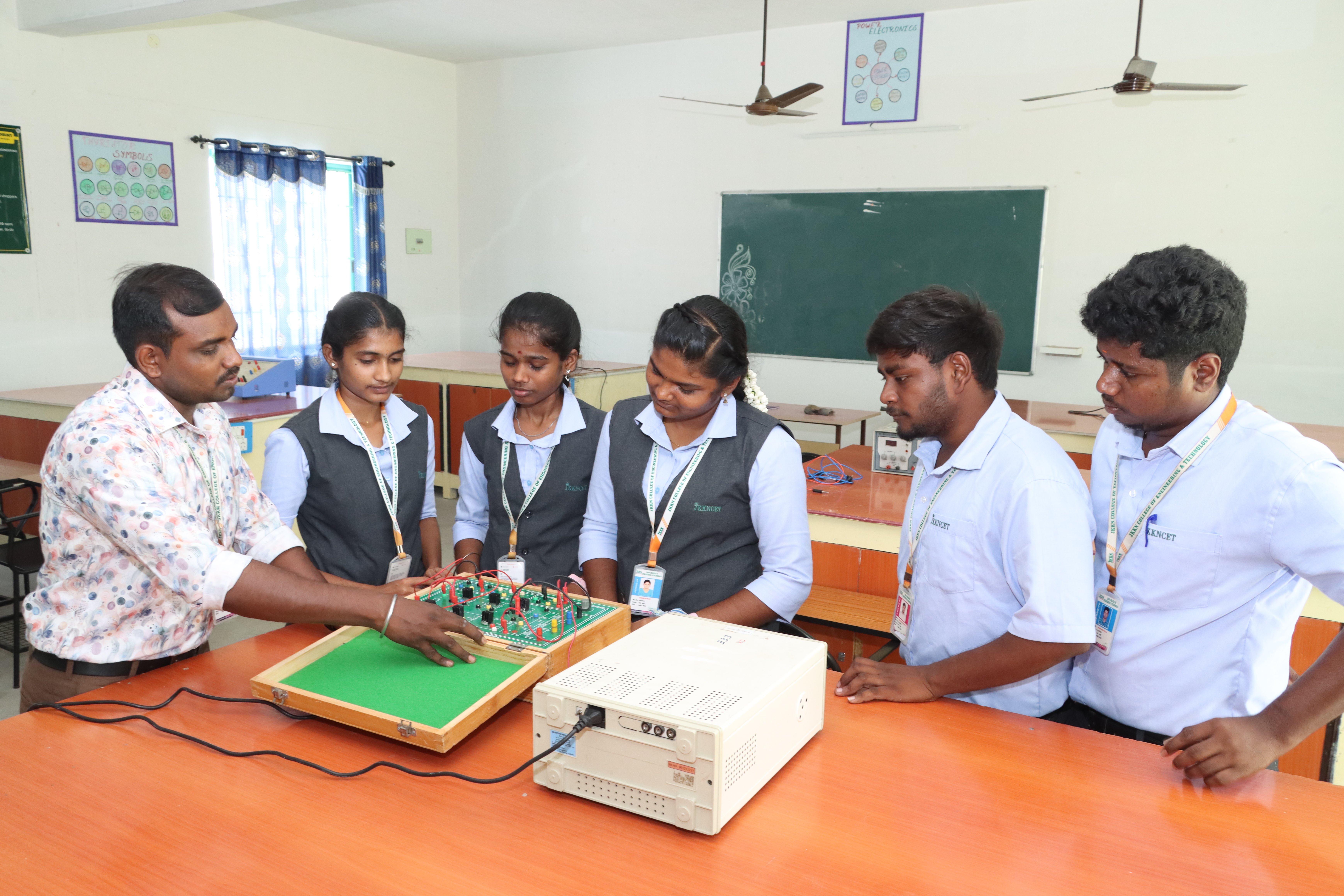
Power Electronics Learning Lab
Modern learning lab featuring converters, inverters, choppers, cycloconverters, motor drives, and DSP-based control systems for practical training in power electronics applications.
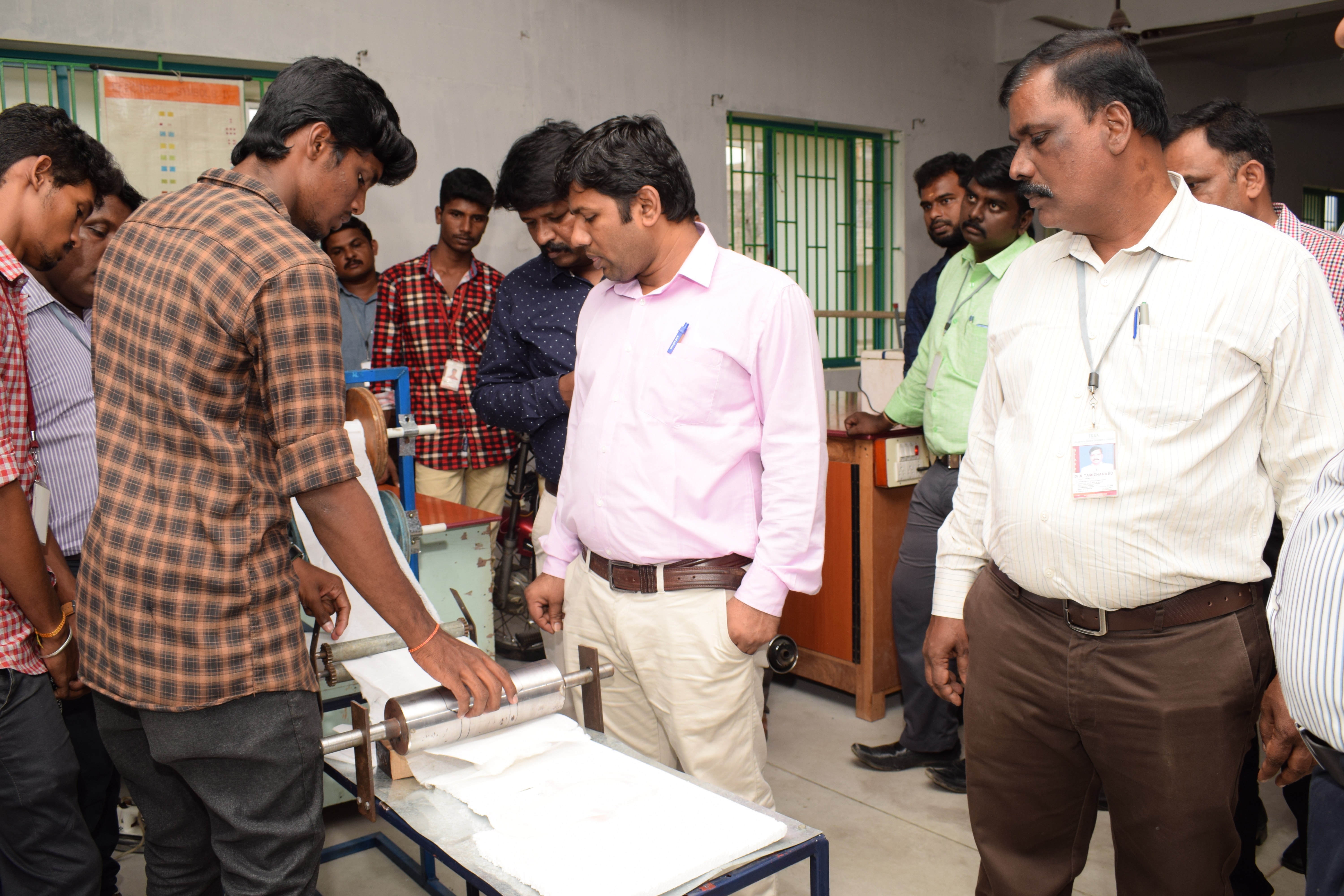
Control Systems Learning Lab
Equipped with PLC trainers, SCADA systems, servo motors, process control trainers, and simulation software for studying linear and nonlinear control systems.
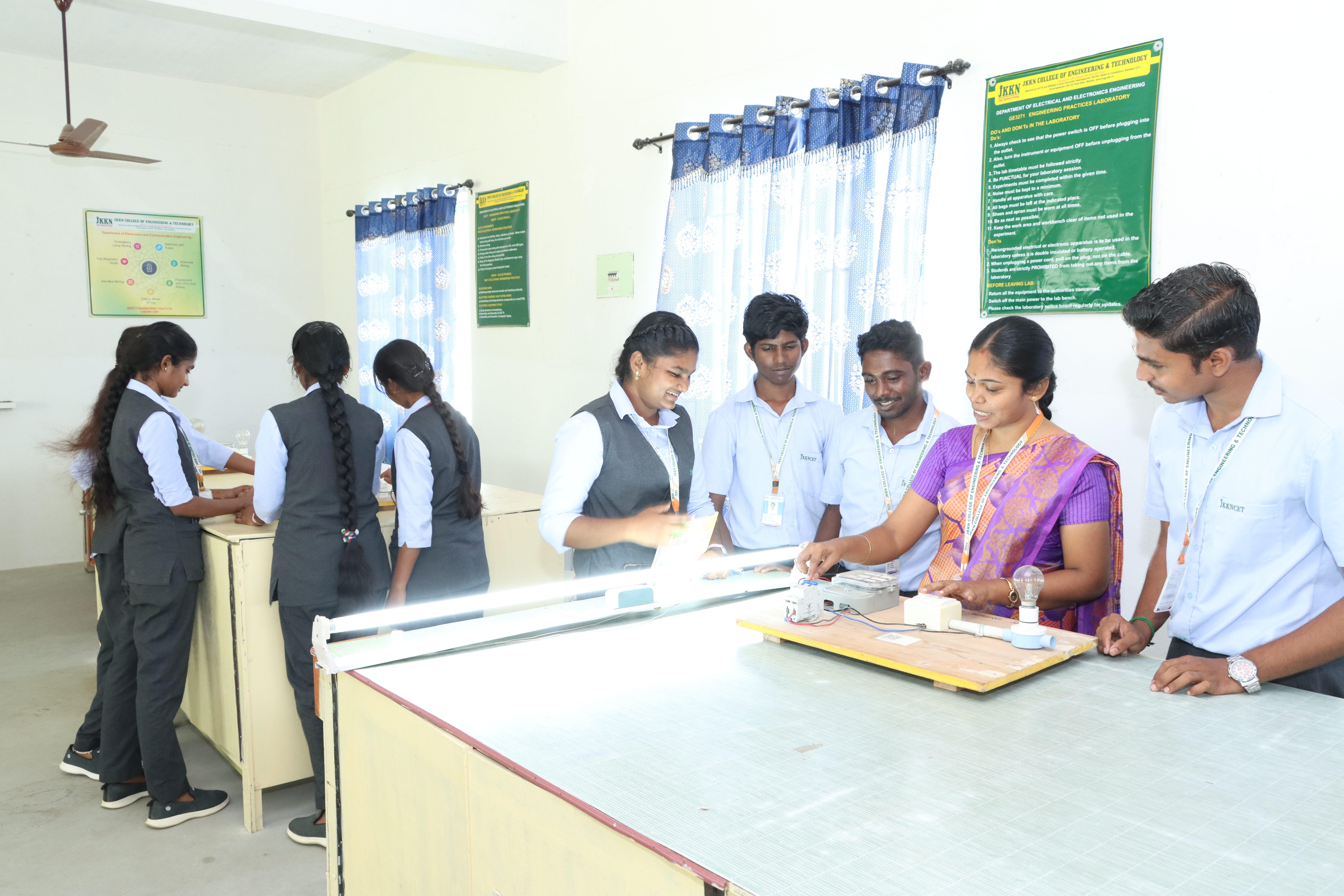
High Voltage Engineering Learning Lab
Specialized learning lab with high voltage testing equipment, impulse generators, transformer testing setups, and insulation testing for understanding HV phenomena.
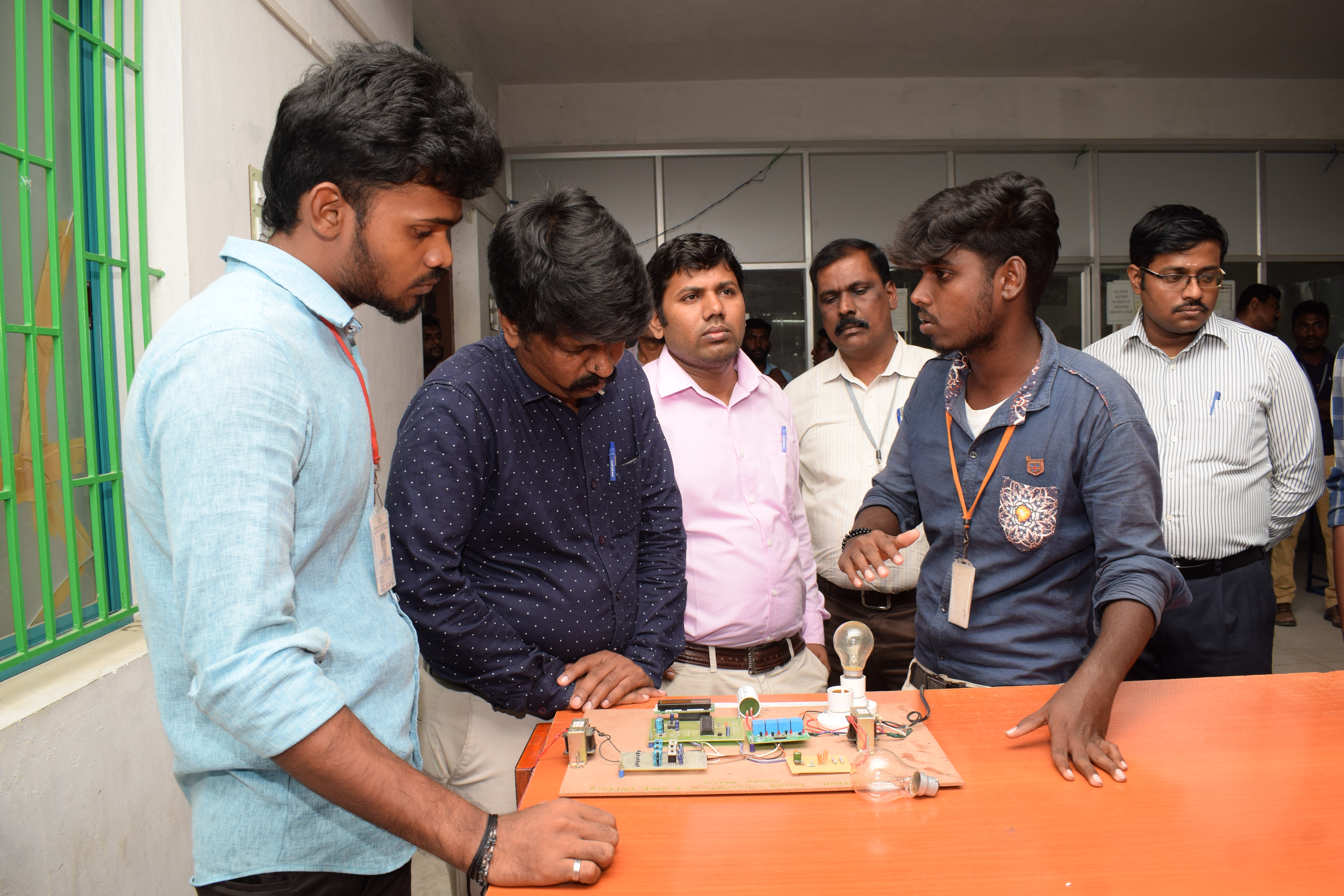
Renewable Energy Learning Lab
Dedicated learning lab with solar panels, wind turbines, battery storage systems, charge controllers, and hybrid renewable energy setups for sustainable energy education.
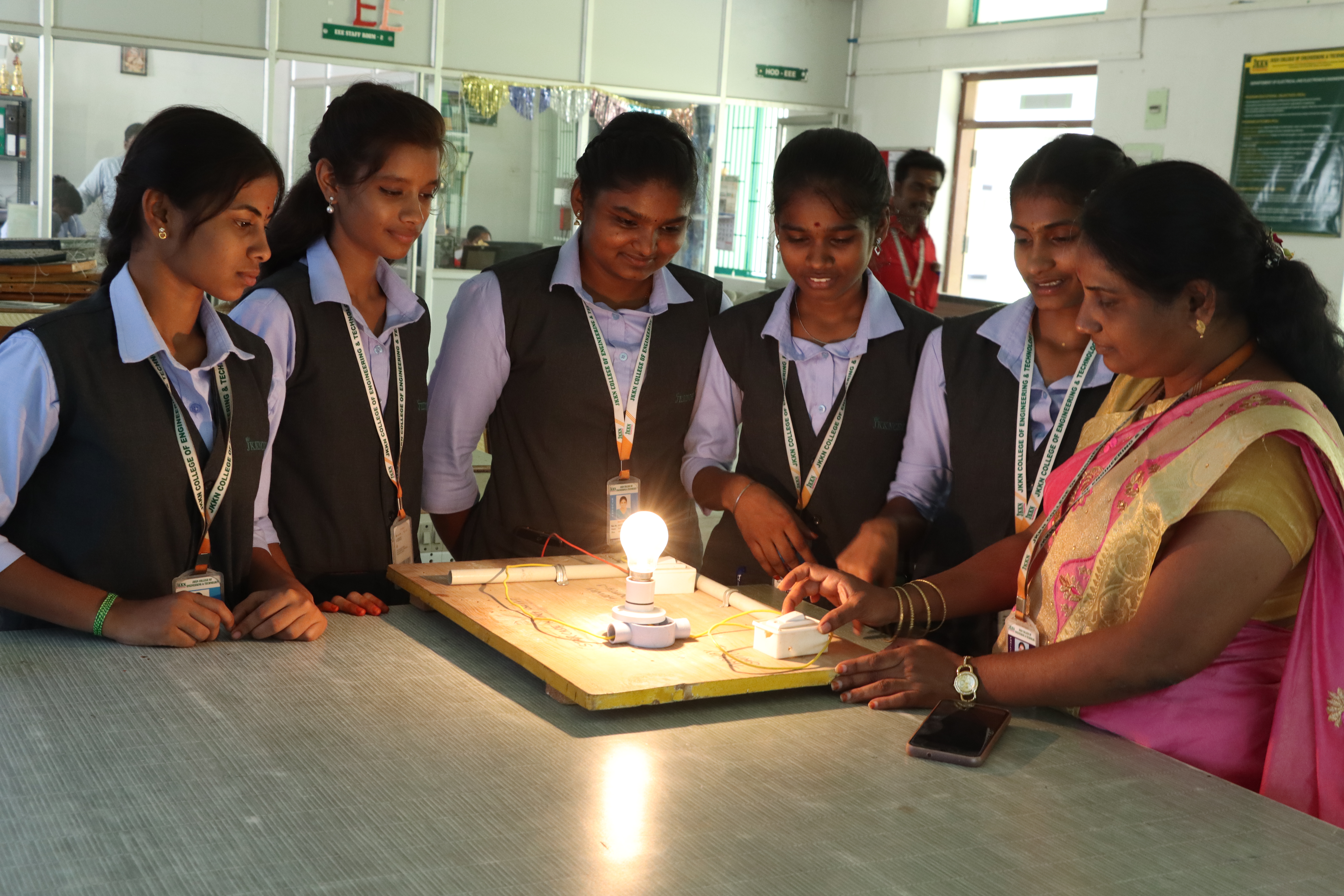
Measurements & Instrumentation Learning Lab
Comprehensive learning lab with analog and digital measuring instruments, transducers, signal conditioning equipment, and data acquisition systems for precision measurements.
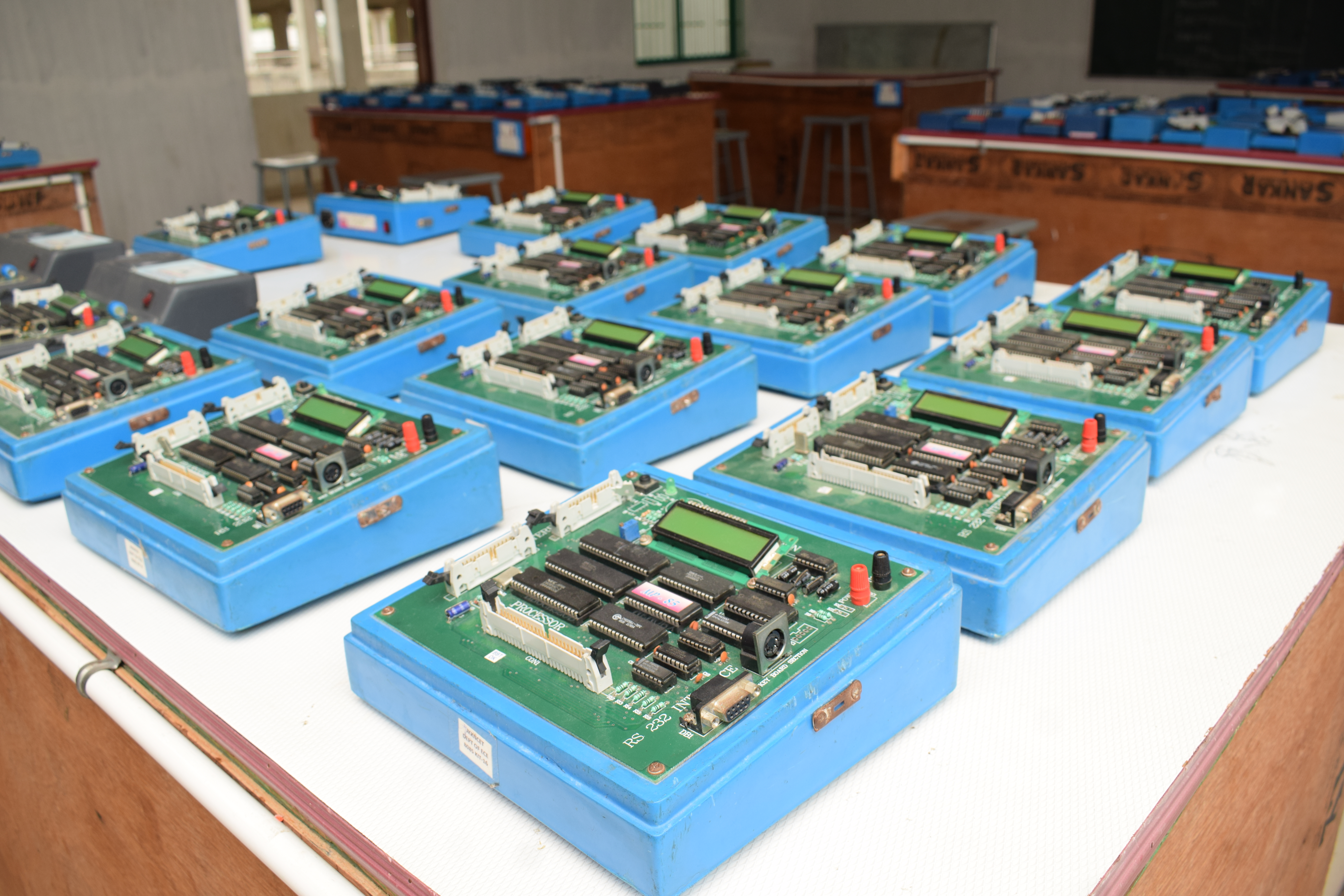
Microprocessor & Microcontroller Learning Lab
Advanced learning lab with 8085, 8086 microprocessor kits, 8051 microcontroller trainers, ARM processors, and embedded development tools for programming and interfacing practice.
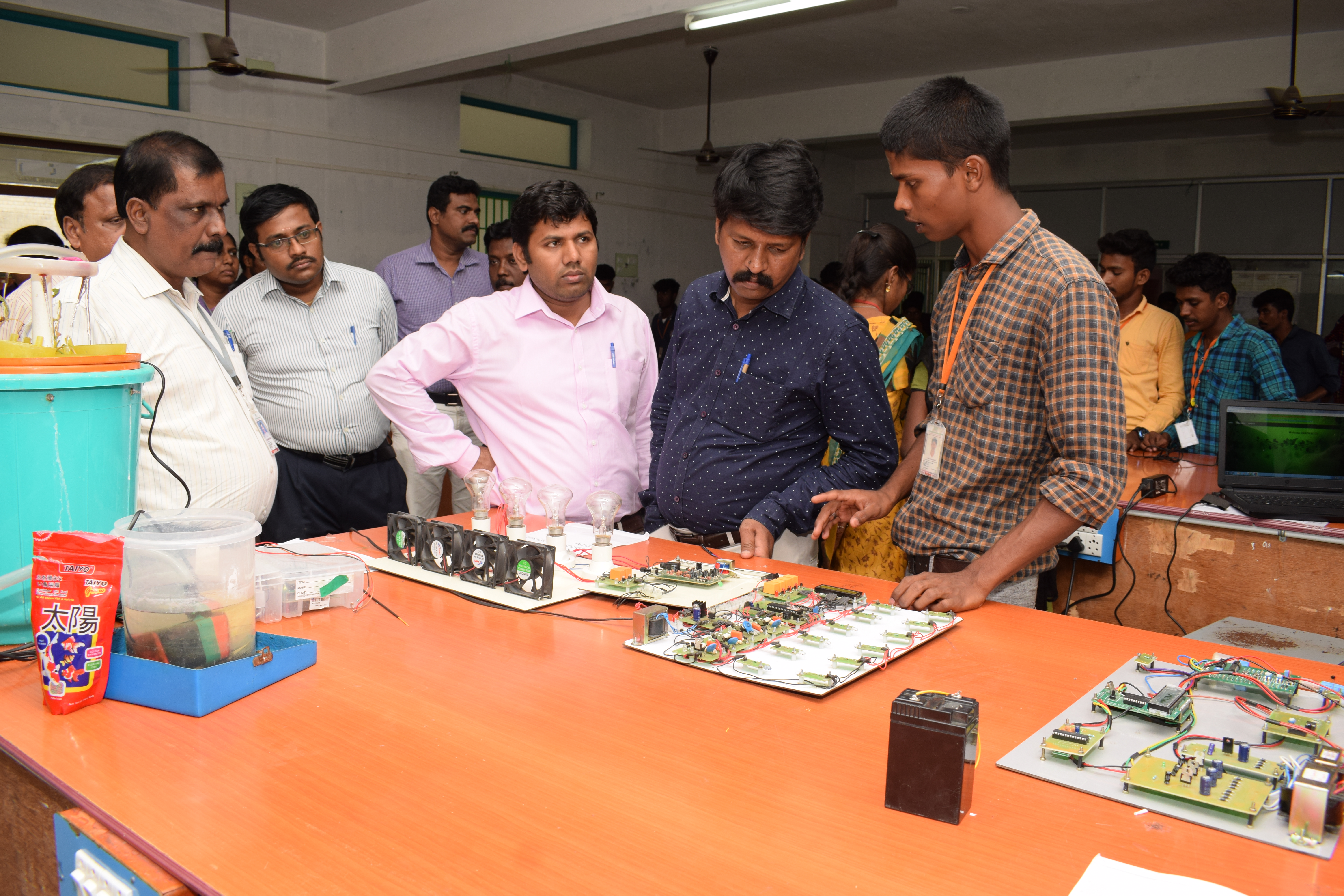
Project Learning Lab
Dedicated space for final year projects and research work with access to advanced equipment, design software, fabrication facilities, and mentorship from senior learners.
Our Experienced Senior Learners

Dr. C. Kathirvel
Senior Learner & Principal
M.E., Ph.D.
Power Systems, Electrical Engineering
Dr. M. R. Mohanraj
Associate Senior Learner & Head
M.E., Ph.D.
Electrical & Electronics Engineering
Mr. K. Aruljothi
Assistant Senior Learner
M.E. (Ph.D)
Electrical & Electronics Engineering
Mr. M. Vignesh
Assistant Senior Learner
M.E.
Electrical & Electronics Engineering
Miss. M. Vaishnavi
Assistant Senior Learner
M.E. (Ph.D)
Electrical & Electronics Engineering
Mr. S. Vijayaprabakaran
Assistant Senior Learner
M.E.
Electrical & Electronics Engineering
Mrs. R. Deepika
Assistant Senior Learner
M.E.
Electrical & Electronics Engineering
Mrs. V. M. Jeevitha
Assistant Senior Learner
M.E. (Ph.D)
Electrical & Electronics Engineering
Mrs. S. Sindhuja
Assistant Senior Learner
M.E.
Electrical & Electronics Engineering
Mrs. M. Dharshini Devi
Assistant Senior Learner
M.E.
Electrical & Electronics Engineering
Frequently Asked Questions
For learners from Namakkal, Erode, Salem and Tiruppur districts, JKKN College of Engineering and Technology in Komarapalayam, Namakkal District, is an Anna University-affiliated autonomous college offering B.E. Electrical and Electronics Engineering with 60 AICTE-approved seats and a Management Quota tuition fee of Rs 45,000 a year. To compare colleges across Tamil Nadu, check the NIRF data, fees and previous-year TNEA EEE cutoff of each college on tneaonline.org.
Register on tneaonline.org, upload your 12th marks with Physics, Chemistry and Mathematics, and receive your TNEA rank. During choice filling, select J.K.K. Nataraja College of Engineering and Technology (TNEA counselling code 2647) and Electrical and Electronics Engineering. Management Quota admission is direct at the college and does not need a TNEA rank.
The TNEA counselling code is 2647. The college is listed as J.K.K. Nataraja College of Engineering and Technology in the Anna University Namakkal district list. Use code 2647 during TNEA choice filling to select B.E. EEE at JKKN.
Open the official TNEA cutoff portal at cutoff.tneaonline.org, search college code 2647, and read the Electrical and Electronics Engineering row for the previous years. Compare it with your own TNEA cutoff mark, then list JKKN EEE at the right position in your choice order.
JKKN College of Engineering and Technology is at Natarajapuram, NH-544 (Salem to Coimbatore National Highway), Komarapalayam, Namakkal District, Tamil Nadu 638183.
Candidates must have passed 10+2 with Physics, Chemistry, and Mathematics with a minimum of 45% aggregate marks (40% for BC / MBC / DNC / SC / SCA / ST), as per the TNEA information brochure. Valid TNEA rank is required for Tamil Nadu learners.
EEE focuses on power systems, electrical machines, power generation, transmission, distribution, and industrial automation. ECE focuses on electronics, telecommunications, signal processing, and embedded systems. EEE deals with heavy current applications while ECE deals with low current electronics.
EEE graduates can work in power generation companies (TNEB, NTPC), electrical equipment manufacturers (BHEL, Siemens, ABB), automation companies (Rockwell, Honeywell), renewable energy firms, electric vehicle companies, and consulting firms. Government jobs in electricity boards and PSUs are also available.
The JKKN Training and Placement Cell organises on-campus recruitment drives and gives aptitude, soft-skills and interview training to EEE learners. Placement data for the college is published in its NIRF filing on the NIRF page of this website.
You will gain hands-on experience in electrical machine testing, power system simulation, PLC programming, SCADA operation, motor drive control, renewable energy system design, AutoCAD electrical design, and project management.
Yes! EEE graduates are highly sought after for government jobs in TNEB, TANGEDCO, Indian Railways, BHEL, NTPC, PGCIL, and other PSUs. You can also prepare for GATE and pursue M.Tech followed by PSU recruitment through GATE score.
We have 9 specialized learning labs including Electrical Machines Learning Lab, Power Systems Learning Lab, Power Electronics Learning Lab, Control Systems Learning Lab, High Voltage Learning Lab, Renewable Energy Learning Lab, Measurements Learning Lab, Microprocessor Learning Lab, and Project Learning Lab with latest equipment and software.
Yes! We offer specialization in renewable energy systems covering solar, wind, hydro power, energy storage, and microgrid technologies. You can also do your final year project in this area and pursue higher studies or careers in the renewable energy sector.
For 2026-27 the annual tuition fee is ₹45,000 (2026-27 course fee sheet). Examination fees and caution deposit are charged as notified by the university; hostel and transport are optional and quoted by the admissions office. Merit, government and need-based scholarships are available for eligible learners.
Yes, we facilitate internships at thermal power plants, substations, manufacturing companies, automation companies, and renewable energy installations. Industrial training is mandatory in 6th semester with full support from the department.
Ready to Power Your Future?
Join our B.E. Electrical & Electronics Engineering program and become part of the team that designs, develops, and maintains the electrical infrastructure powering our nation. 2026-27 admissions are closed; enquiries for 2027-28 are open.